 Dave S Young
Dave S Young
Dave S Young
.jpg)
Dave Young = zeal + experience.
 Resume
I coach co-founders, CEOs, and VPs of Design to help them better articulate a narrative of purpose and vision for maximum impact. This is achieved through stakeholder interviews and fun workshops (remote or in-person) to help cross-functional teams break down silos and learn how to leverage each other, service design, and customer obsession. These engagements help your teams work together to identify and prioritize the right incremental roadmap to accomplish your new business strategy.
I'm able to meet weekly or monthly with CEO's and co-founders to discuss the challenges they are facing, discuss their options, and evaluate which strategy would be most beneficial to them at this time.
High-growth startups inevitably struggle with the familiar challenges of team interests and priorities becoming fragmented and siloed.
The executive leadership workshops I've led across many teams at Uber and other companies help folks become more "org-agnostic" focused instead on helping the company succeed through a more humble and customer-obsessed approach.
Practicing Service Design helps companies understand the marketplace they serve so that they can deliver value in meaningful brand experiences to differentiate their service and deepen their moat.
The service design workshops I led at Uber brought cross-functional teams together to look at the end-to-end experience of people brought together by digital services, operations, and real-world challenges.
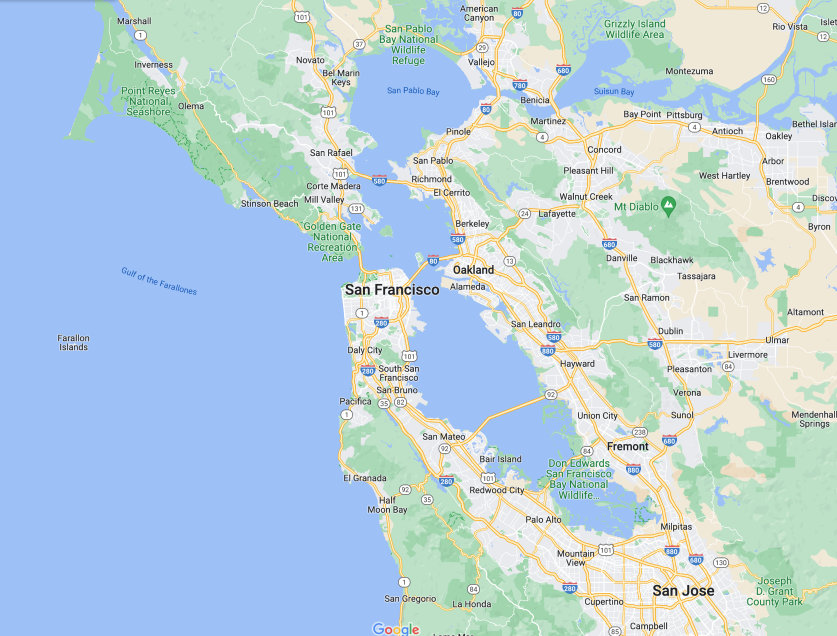
First full-time designer on team of 90 engineers from multiple acquisitions.
Internationalization, geodata creation and curation, editable maps, search results, reviews, filtering, location content, business content, UX goals for direction algorithms, multi-step directions, draggable direction routes, printing, saved places, custom map creation and collaboration.

Joined the founding designer and researcher on a team of >30 eng.
Sharing permissions, comments, revision history, custom color picker, document themes, visual redesign of docs in collaboration with designers across all google products to create our first design system.

We launched Google Presentations as a spin off of the Docs team supercharged by two eng build/buy acquisitions.
Market differentiation strategy (Keynote=Polish, PPT=Power, Google=Collaboration), Special editor tools, ease of sharing, invite flows, gmail attachments, anonymous viewing and editing, contextual live chat, comments, slide themes, use of phone as slideshow remote, bi-directional languages.
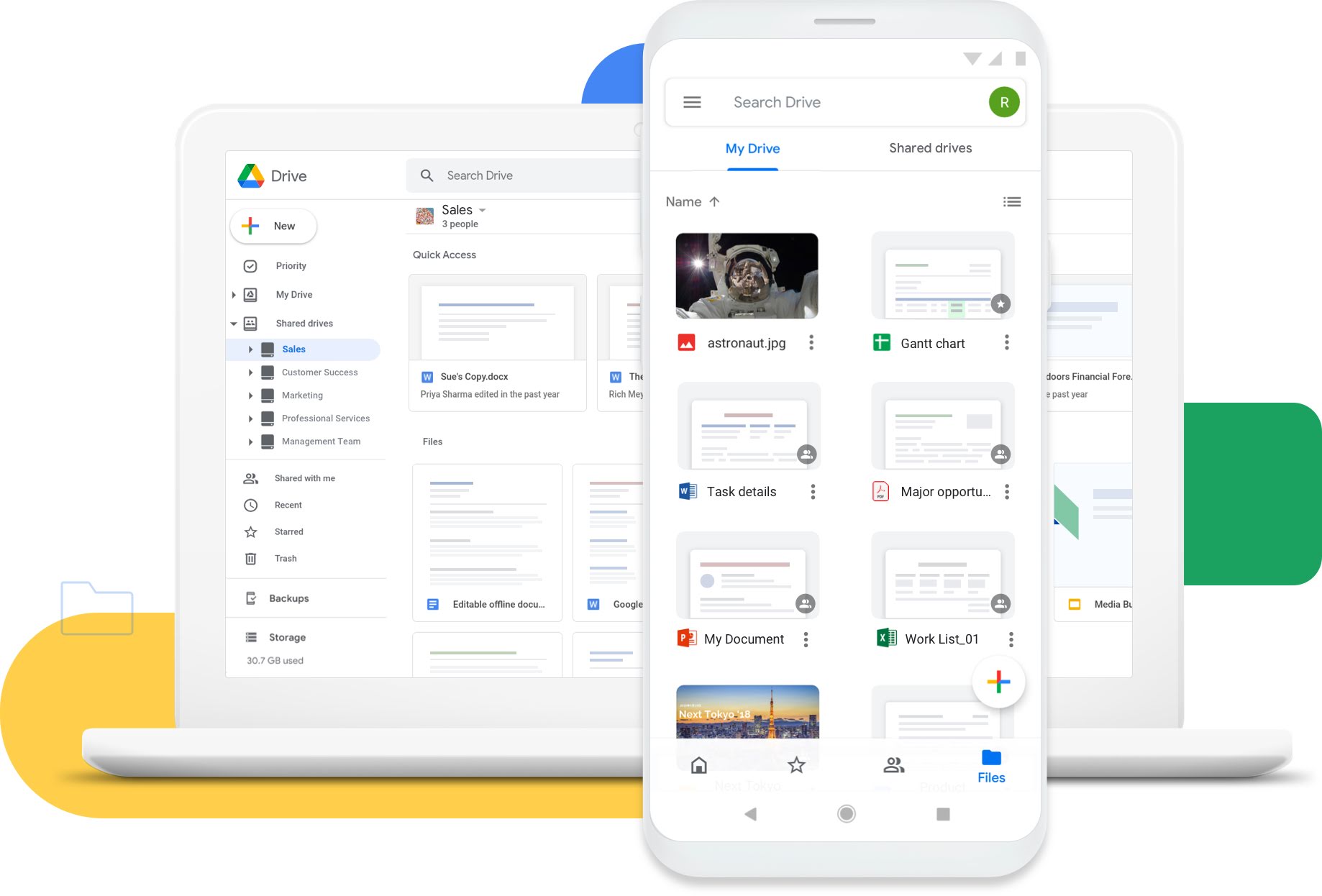

I led a unified sharing and collaboration strategy across all Google products and services. Managing disparate sharing flows and the politics of stakeholder management.
Having a unified sharing model allowed us to tackle the even more gnarly problem of "shared folders" with complex inheritance issues. (Something my friends at Dropbox deeply respected and envied).
.png)
.png)
Joined an awesome team of three designers on gmail.
My projects were focused on leveraging contextual behavioral insights to accelerate productivity and reduce the need to leave gmail, (eg. smart compose recommendations on who to CC, personal/professional emails, and pulling in previews of linked content like yelp).
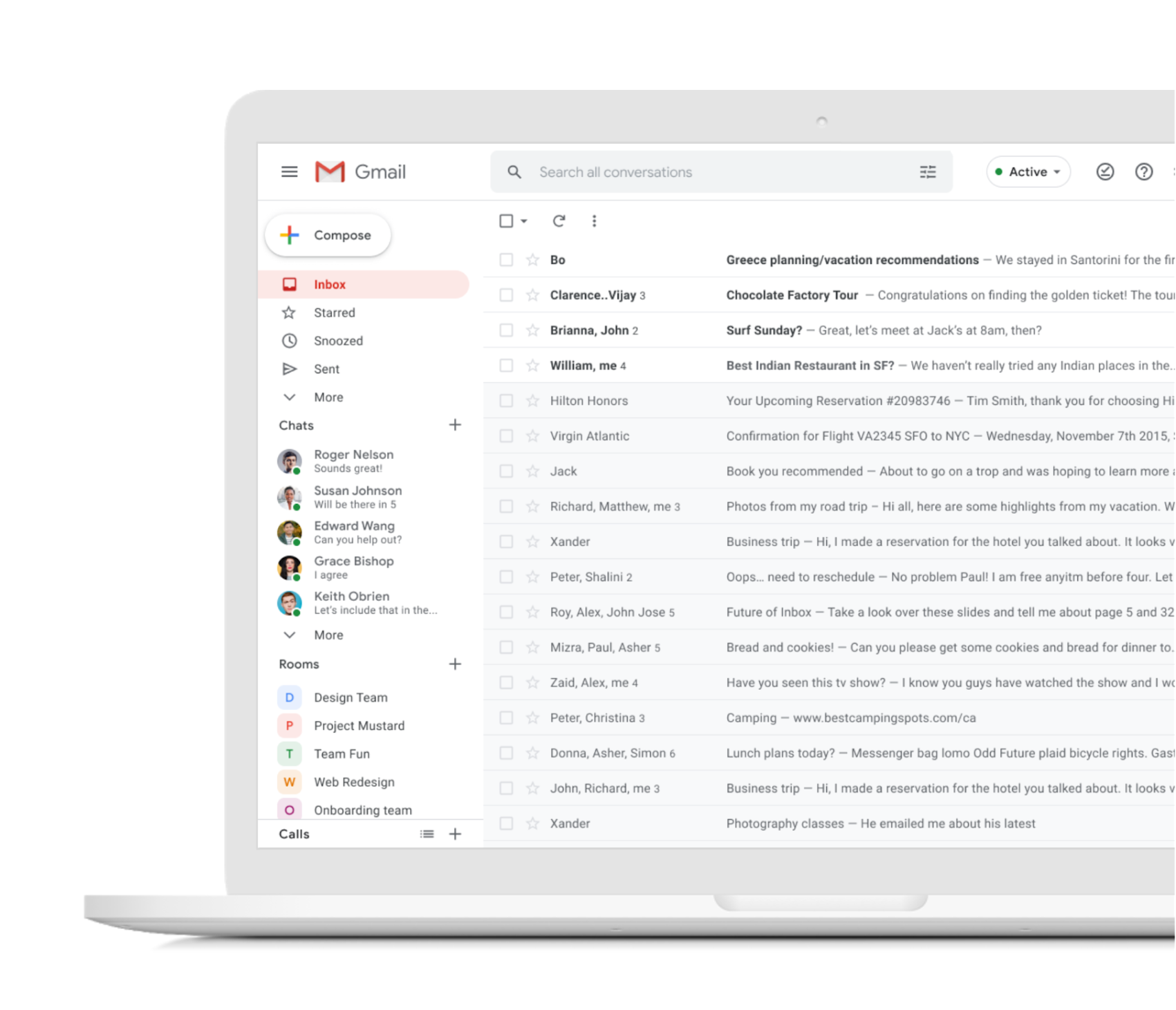

I was asked to join a team burned out and further insulted by executives setting a company OKR of "Contacts that don't suck" ...yeah that happened. 😅
I created "go/suckscore" a dashboard of all known executive gripes and customer challenges. This defused political tension and built confidence and morale. Folks cheered us on as we "killed the suck." We tackled hairy problems like complex outlook import flows, merging contacts, slurping in contact data from past email correspondence, and allowing people to share and maintain their own "evergreen" contact info with all their contacts.
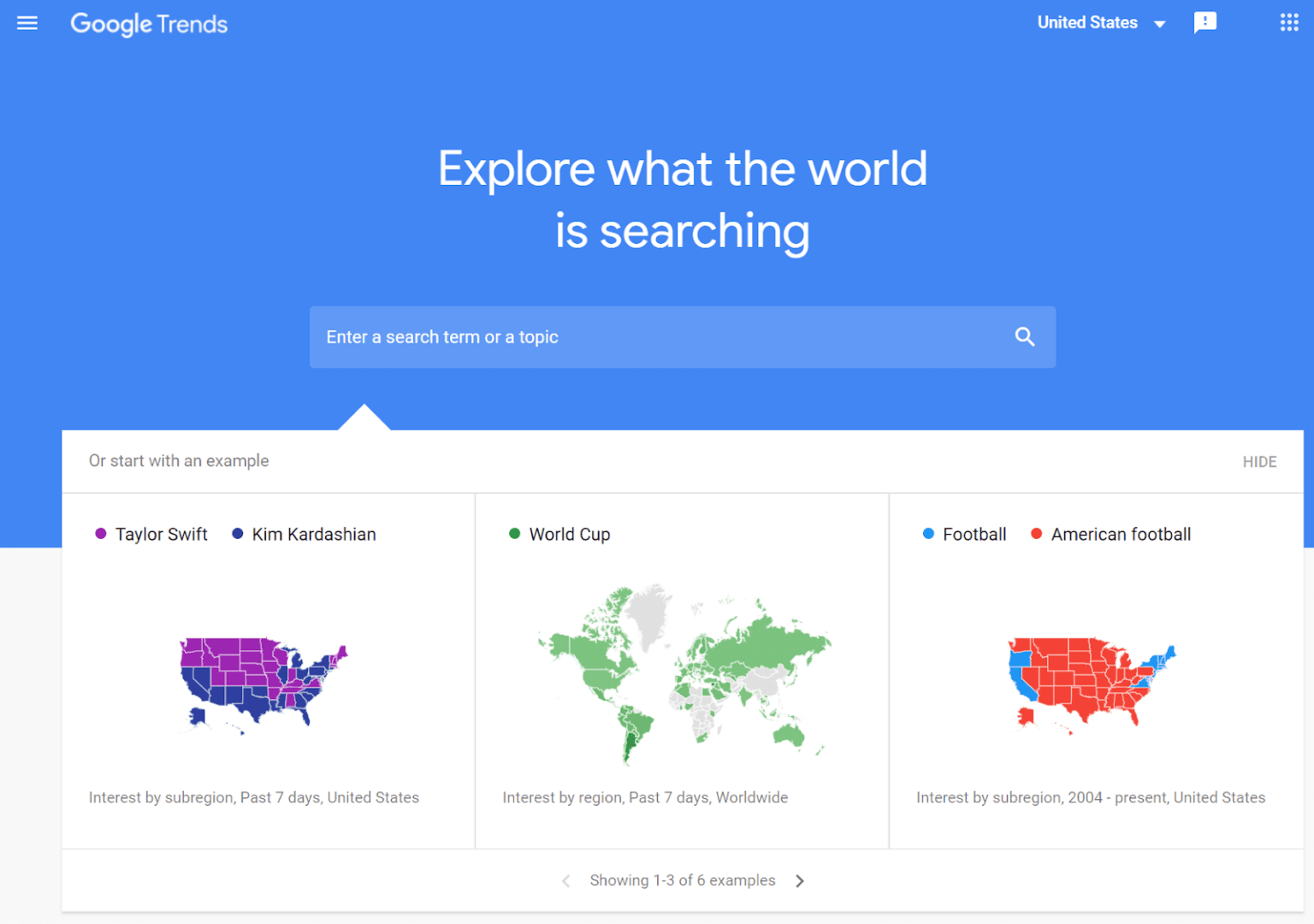

Larry and Sergey asked a small group of engineers, a pm, a good design friend/colleague of mine, and myself to demonstrate the value of Google being able to keep anonymized search traffic data.
We created Google Trends in our 20% time which was meant to unlock a new data resource for thousands of brilliant PHD researchers.
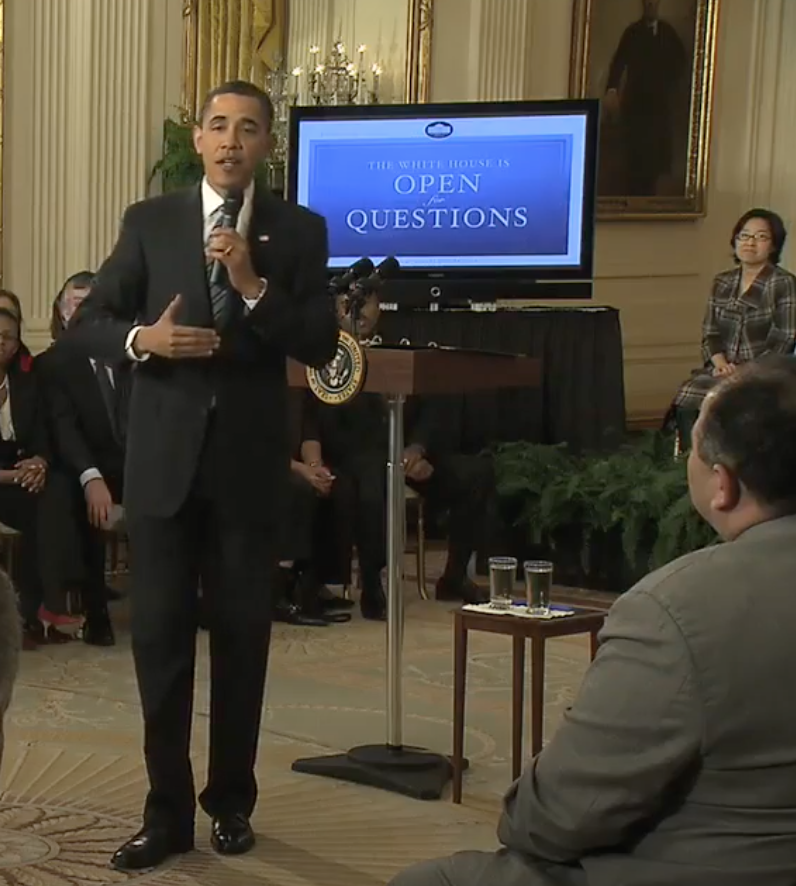
Two engineers, a pm, and I worked on Google Moderator (aka "Dory") as our 20% project to better allow large groups of people to select the best questions to ask of world leaders.
It was first used internally when famous guest lectures visited the Google campus. When Obama became president he asked us to work with him and used Google Moderator to host the historic event of our nation's first online town hall. The Google Moderator algorithms I worked on correctly identified a broad and growing interest in legalization questions years before it was popularized and acted on by our state governments.
.png)
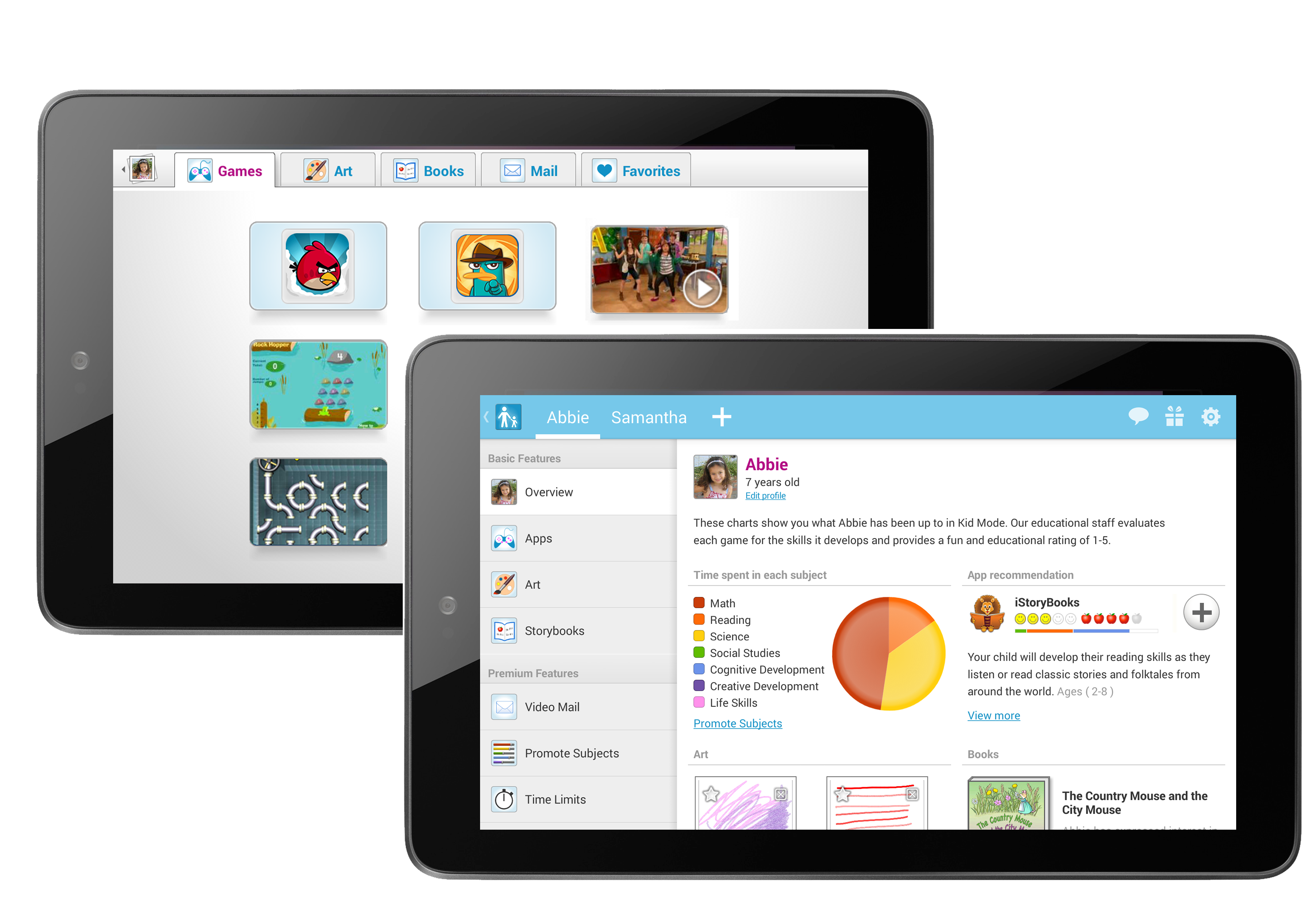
Hired by the CEO to lead design and research. Over the course of 4 years, we went from 300 customers to 15 million and were acquired by HTC.
We made it easy for parents to lock down any device (laptop/tablet/phone) into a Kid Mode™ that brought forward fun and educational content, selected by educational experts, to improve specific age-appropriate skills.
We indexed third-party games, videos, and apps. We also created our own recordable storybooks, digital art studio, and private video mail to help kids stay connected with distant family. I managed a team of 11 illustrators and one game designer on contract.
.png)
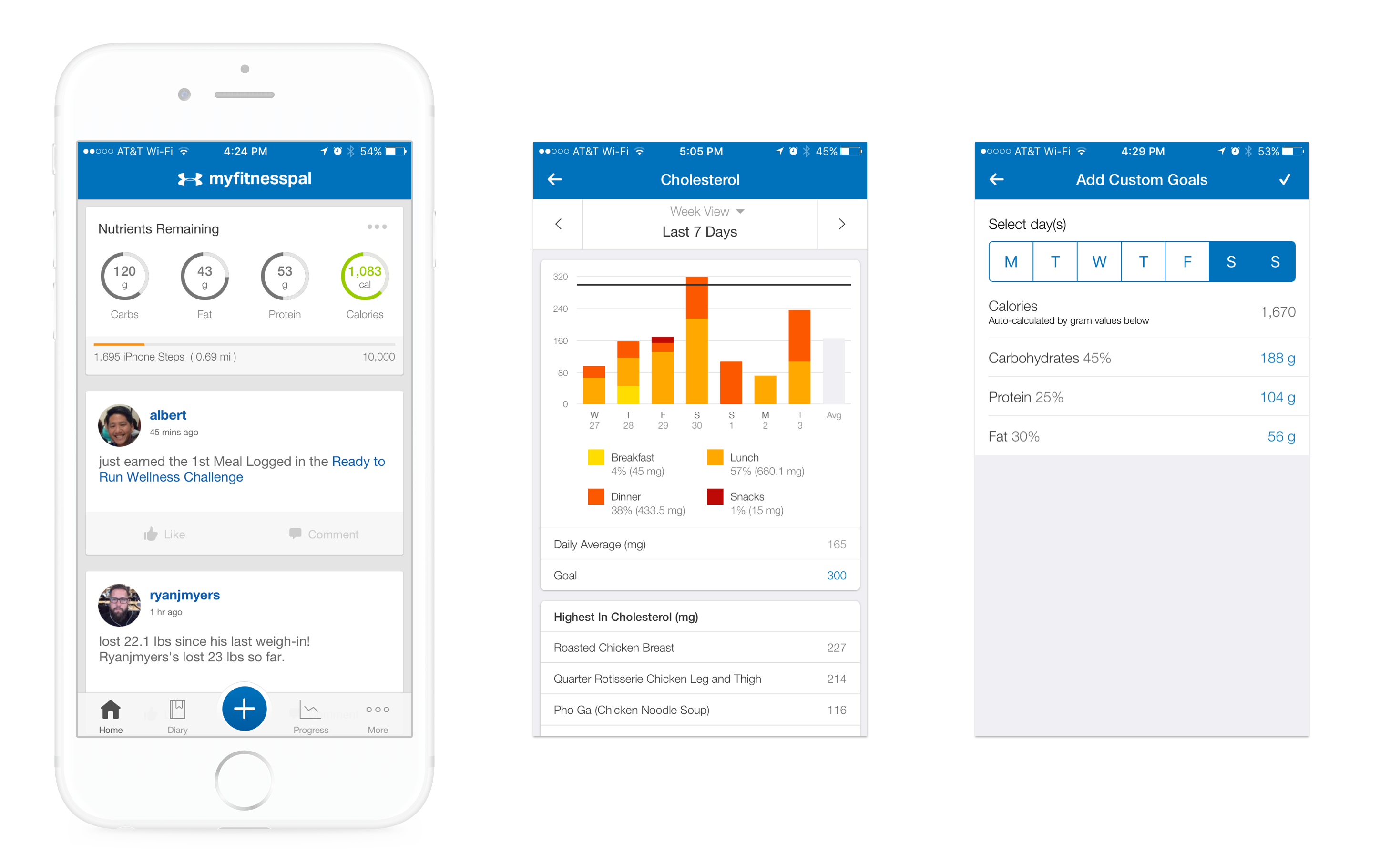
Hired by the CEO to lead design and research. Over the course of two years we went from 75 million customers to 150 and got acquired by Under Armour.
We improved customer experience and speed of product development by redesigning web, iOS, and Android to leverage a shared design system. We cleaned up search results, standardized serving sizes, launched new verified nutritional data, restaurant menus, and new recipe import flows. We launched MFP's first paid membership feature set and were one of the original Apple Watch launch partners.
After Under Armour acquired us along with several other "Connected Fitness" apps we worked together on unified login, standardized components, and a strategic partnership across digital services, hardware, and athletic gear.
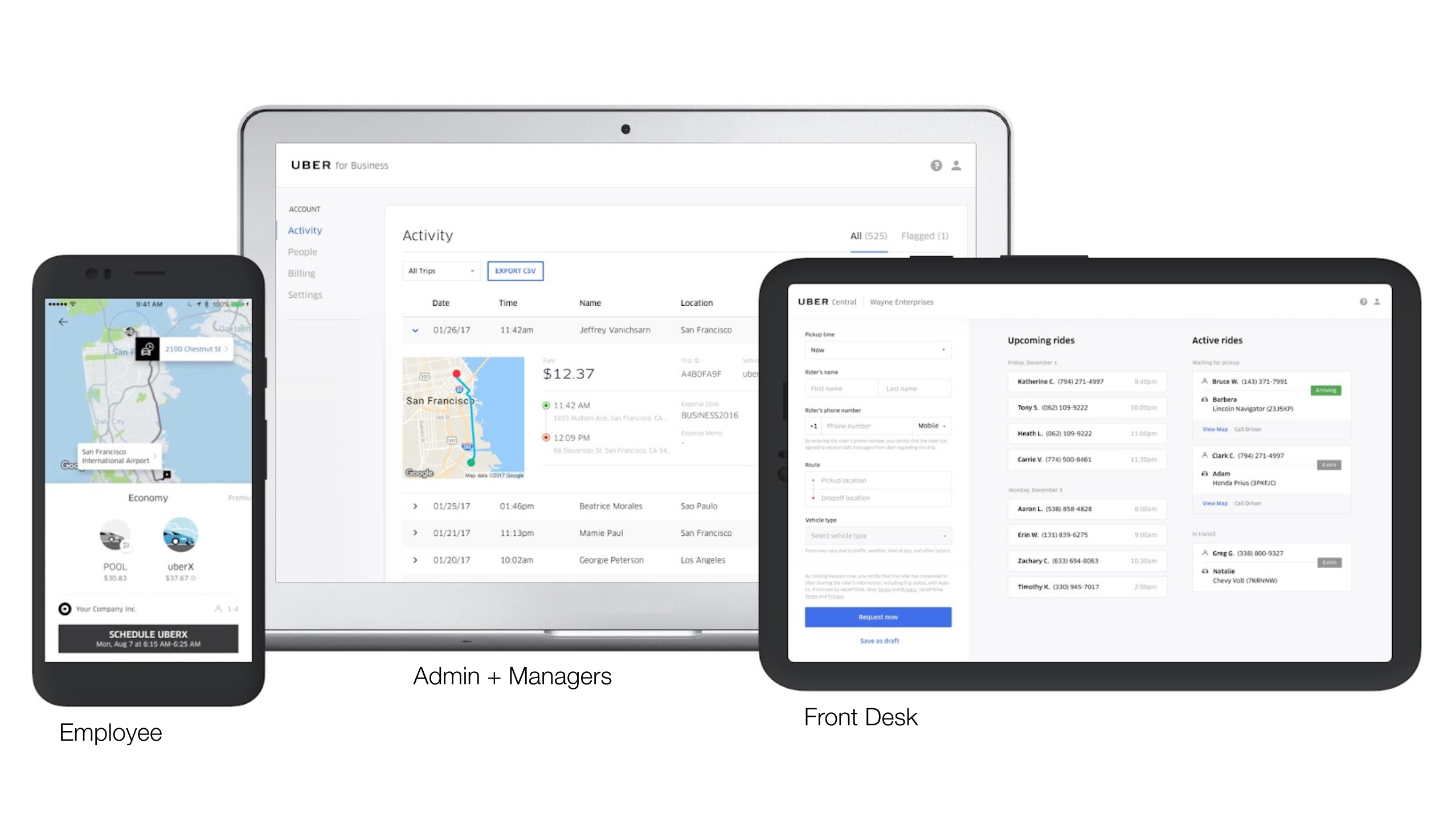

Hired by the Head of Design to run Product Design, Research, and Brand Design for "Uber for Business."
We built and launched services for employee travel, employee meals, expense integration, company cards, direct billing, commuter benefits, onsite interviews, customer travel, travel vouchers, eats vouchers, event planning, concierge services, catering, and instant policy validation. Our strategy spanned SMB, Enterprise, Municipalities, Universities, Non-profits, and Health Care.
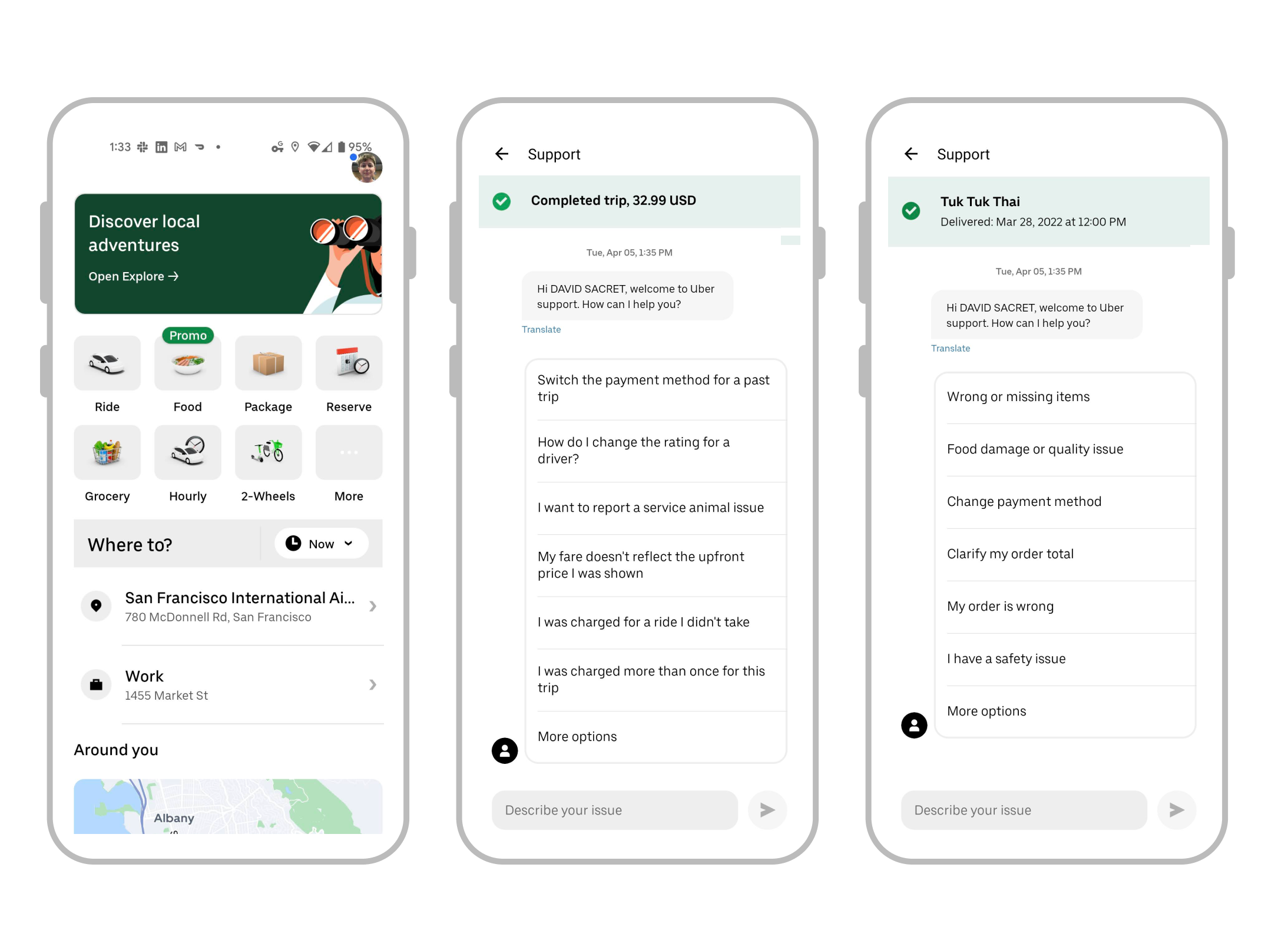
Support is one of the best ways for Uber to differentiate itself from competitors.
I worked with support agents, support ops, our internal customer relationship management tools team, and executive leadership across all functions and lines of business to surface valuable customer insights. We helped product teams perform root cause analysis and launched a company-wide initiative to reduce product defects.
We framed the true cost of these customer issues in terms of both operational costs and the severity of their cost to our brand aspirations and our core customer value proposition.
I built strong partnerships with the people running and working in our Green Light Hubs, Internal Support Centers, External support centers, as well as our internal Safety, Security, and Fraud teams. I also partnered with the VP of our Incident Response Team on initiatives to improve agent wellness. These initiatives helped Uber reduce the cost of support operations and improve customer satisfaction.
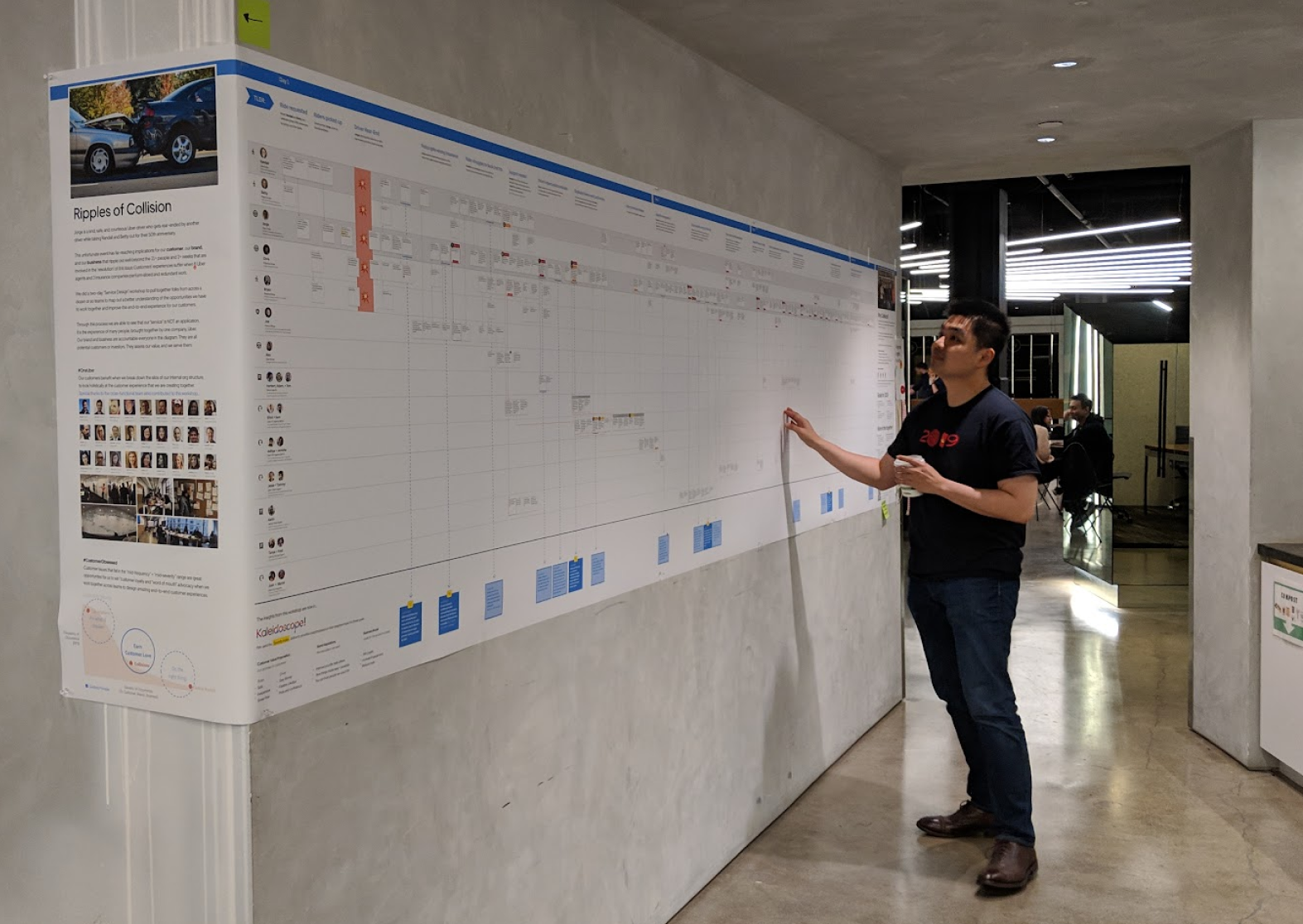
While reporting to the VP of Design, I had the chance to help him use design systems to nudge designers' focus away from visual, interaction, and product design to instead think more holistically about the end-to-end customer experience and Service Design.
My "Frequency Severity Workshop" helped the VPs and executives of PM, Design, Engineering, and Marketing develop a culture of "customer obsession" learning directly from the support agents who have helped thousands of customers through frequent and severe customer experiences.
My "Ripples Workshop" provided a cross-functional collaborative framework for creating service blueprints of "multisided markets." Where a company is the hub that facilitates the experience of all parties involved.
.png)
.png)
Hired by the CEO to work on Hover's forward looking mission, purpose, vision, and strategic roadmap.
I worked cross-functionally with product, engineering, design, research, support, operations, marketing, and sales. We discussed the past insights and inspiration on why people came to Hover and what they want to help Hover achieve.
We simplified these insights into concise and coherent articulations of why the market needs a better process and marketplace for property improvements.
We identified the ways Hover can create and provide new value to homeowners, contractors, and insurance companies.
We created a shared language for evaluating our brand aspirations and the value prop we can offer each side of the market at different phases of homeownership and project management.
We illustrated the future world of services we aim to offer, identified a roadmap of key projects we'd need to work on, and underscored the importance of investing in our 'foundation' > 'features.'

I'm currently advising a few companies while exploring new opportunities to help CEOs and Co-Founders inspire their teams' best work.